Mold Removal in Pleasant Grove, UT
Pleasant Grove was named for a cottonwood grove between Battle Creek and Grove Creek, and both creeks still come off Timpanogos straight at the town. The old town inside the 1853 fort footprint is a historic district of 134 buildings: adobe first, local soft rock from 1869, brick from 1890, then bungalows around 1915. Those homes sit on stone and rubble foundations that were never meant to be dry, and the cellars under them weep in a wet spring.
The creeks are why the county built debris-basin dams on Battle Creek in 1961 and Grove Creek in 1963, and why both were rebuilt in a project finished in June 2019 that protects about 5,330 homes in Pleasant Grove and the towns next to it. The 1983 melt started flooding here in late May, and Utah County declared its emergency in Pleasant Grove first. The subdivisions from the 1990s and 2000s that spread west toward the freeway sit on flatter ground with the water table closer underneath.
A call to this site connects a Pleasant Grove homeowner with an independent mold provider working in the area. The provider inspects and quotes; this site never touches the work.
Pleasant Grove mold removal, stone cellars and finished basements
A whitewashed stone foundation wall in an old-town cellar that grows a dark bloom every May is a black mold removal call, and the crew treats the stone in place while removing anything porous that sat against it. In the newer subdivisions the call is a finished wall that reads wet along the bottom after a window well filled, which is basement mold remediation. A bathroom fan on a 1970s home that ends in the attic and drips back onto the ceiling all winter is bathroom mold removal work.
Where to call in Pleasant Grove
Drywall, plumbing, and electrical repairs after removal go through the Pleasant Grove Building Division, which takes permit applications online. The town has called itself Utah's Strawberry City since the first Strawberry Days in 1921, and the orchards that earned the name were on the same well-watered ground the subdivisions now cover.
Call (385) 534-4662 to be connected with a local mold provider serving Pleasant Grove.
Services Available in Pleasant Grove
Mold Removal
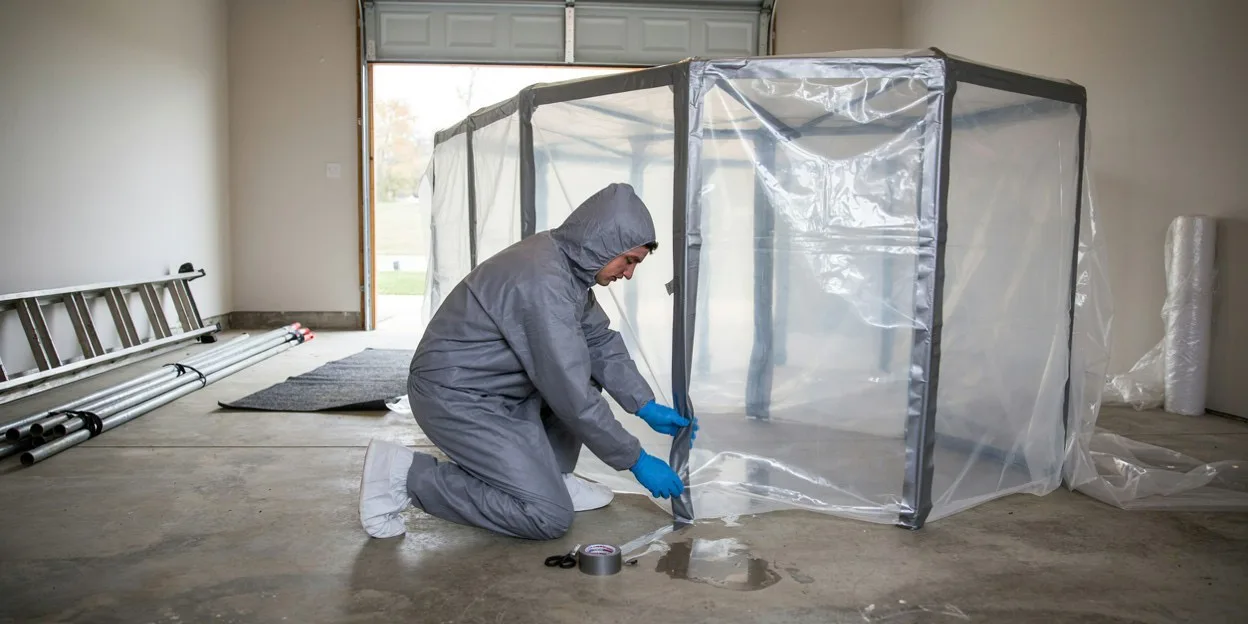
Containment, negative air, and removal of the wet drywall, carpet pad, and insulation that grew it, then cleaning and drying what stays.
Black Mold Removal
Dark growth handled under full containment with protective gear. Color does not name the species, and the work does not change because of it.
Basement Mold Remediation
Finished basements that took water from a window well, a seep, a sump, or a burst line, opened, cleared, and dried to the foundation.
Whole-Home Mold Remediation
Room-by-room containment and removal after a long leak, a winter pipe burst in an empty house, or a basement that flooded more than once.
Bathroom Mold Removal
Growth on ceilings, behind vanities, and inside walls from steam, a slow supply leak, or a fan that vents into the attic.
HVAC Mold Cleaning
Furnace cabinet, coil, humidifier, and duct cleaning when the smell comes with the blower, plus swamp-cooler pads and pans on older homes.
Mold Odor Removal
Finding and removing the wet material behind a musty smell in a basement or crawl space, then clearing the air instead of covering it.
Mold Damage Repair
Drywall, baseboard, insulation, and subfloor put back after removal, with the wall read dry before anything closes.