Mold Removal in Hunter Park, UT
Hunter Park is the neighborhood around the city park of the same name at 610 West 1120 North, on the northwest side of American Fork between the old town and the Lehi line. The park has grassy hills the kids sled in winter, mature trees, and a trail into an undeveloped wooded strip with a small stream running through it. That stream is the point: this part of town has live drainage moving through it year round, and the homes around the park were built on ground that used to carry more of it.
The housing is established rather than new. The subdivisions here went in from the 1980s into the early 2000s as the farmland north and west of downtown was platted, and about 87 percent of the homes are owner-occupied. They are brick and stucco ramblers and two-stories with full basements, most finished long ago and many on their second carpet. A window well that has settled toward the house over thirty years is a common find.
Hunter Park homeowners who call this site are put on the phone with an independent local mold provider. The provider handles the inspection and the work. This site sets up the call.
Hunter Park mold removal, settled window wells and old carpet
A basement bedroom with a musty smell and a window well that filled during the May 2023 melt is a basement mold remediation call, and the carpet pad is where the growth is. A 1990s furnace with a humidifier that has never had its pad changed is why HVAC mold cleaning calls come from this part of town in the fall. When the smell has no visible source, mold odor removal starts with a meter along the wall closest to the stream.
Where to call in Hunter Park
The American Fork Fitness Center on North Center Street is the neighborhood's nearest city building, and the parks office that manages Hunter Park works out of the same municipal complex.
Call (385) 534-4662 to be connected with a local mold provider serving Hunter Park.
Services Available in Hunter Park
Mold Removal
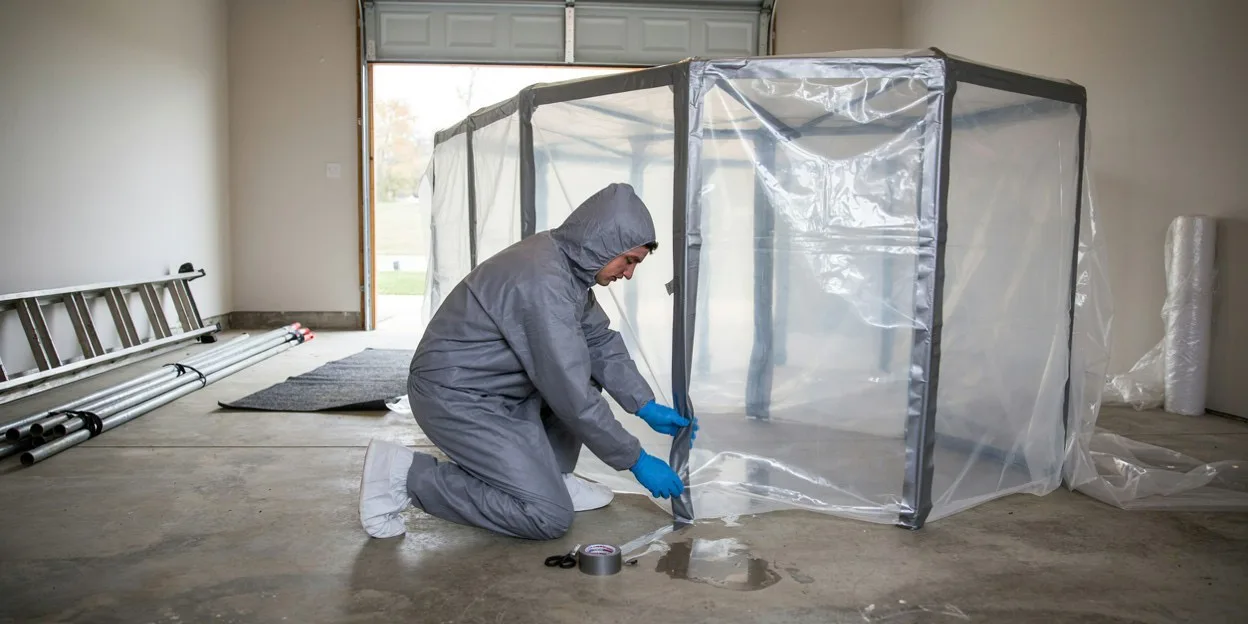
Containment, negative air, and removal of the wet drywall, carpet pad, and insulation that grew it, then cleaning and drying what stays.
Black Mold Removal
Dark growth handled under full containment with protective gear. Color does not name the species, and the work does not change because of it.
Basement Mold Remediation
Finished basements that took water from a window well, a seep, a sump, or a burst line, opened, cleared, and dried to the foundation.
Whole-Home Mold Remediation
Room-by-room containment and removal after a long leak, a winter pipe burst in an empty house, or a basement that flooded more than once.
Bathroom Mold Removal
Growth on ceilings, behind vanities, and inside walls from steam, a slow supply leak, or a fan that vents into the attic.
HVAC Mold Cleaning
Furnace cabinet, coil, humidifier, and duct cleaning when the smell comes with the blower, plus swamp-cooler pads and pans on older homes.
Mold Odor Removal
Finding and removing the wet material behind a musty smell in a basement or crawl space, then clearing the air instead of covering it.
Mold Damage Repair
Drywall, baseboard, insulation, and subfloor put back after removal, with the wall read dry before anything closes.